What is a Dino 308?

The page is not just a technical overview.
It is an attempt to understand why the Dino 308 GT4 exists — and why it has been so misunderstood for years. 

Una Ferrari diversa

At first glance, the Dino 308 GT4 seems easy to explain.

   > A mid-engined V8 Ferrari from the 1970s.

   > Four seats.

   > Sharp lines.

   > Modest dimensions.

All simple facts — and yet none of them really explain why this car feels so different from what you would normally expect a Ferrari to be.

Maybe because the 308 GT4 was never designed to be a poster car.

It was created during a period of great transition — for Ferrari as a company and for sports cars as a category.

Understanding the Dino 308 GT4 requires one to look beyond surface impressions and placing it back into its original context.

“Tecnicamente una Ferrari.
Nel cuore, una Dino.”

A Ferrari at a Turning Point

When the Dino 308 GT4 was introduced in 1973, Ferrari was navigating a particularly complex moment in its history.

Like much of the automotive world in the 70s, the company was being pushed to respond to tightening safety and emissions regulations — pressures that made it harder to sustain the old certainties of the previous decade.

Yet the transformation was also internal. Following Fiat’s entry into the company at the end of the 1960s, Ferrari was entering a new phase of stability and scale, and preparing for a future in which it could no longer rely exclusively on its familiar V12 grand tourers.

The GT4 became Ferrari’s first production road car powered by a V8 engine — not merely a technical milestone, but the beginning of a new architectural direction that would shape the brand for decades to come.

At the same time, it was conceived as a more practical grand tourer, intended to succeed the beloved Dino 246 and to meet the demands of a changing market.

Mobirise Website Builder


The Dino Name


Although engineered and built entirely by Ferrari, the 308 GT4 was initially not sold as a Ferrari.

Instead, it carried the Dino badge — a sub-brand created earlier to honor Alfredo “Dino” Ferrari and to distinguish V6 and V8 models from the company’s V12 flagships.

There was no prancing horse on the nose, no Ferrari script on the tail — a deliberate distance, even in the name.

In theory, this allowed Ferrari to protect its core identity.

In practice, it left the GT4 in a rather uncomfortable middle ground: mechanically ambitious, yet symbolically restrained.

Only a few years later would the car officially receive Ferrari badging — by which time its reputation had already been shaped.

To explain this aspect further: History & Context
Mobirise Website Builder

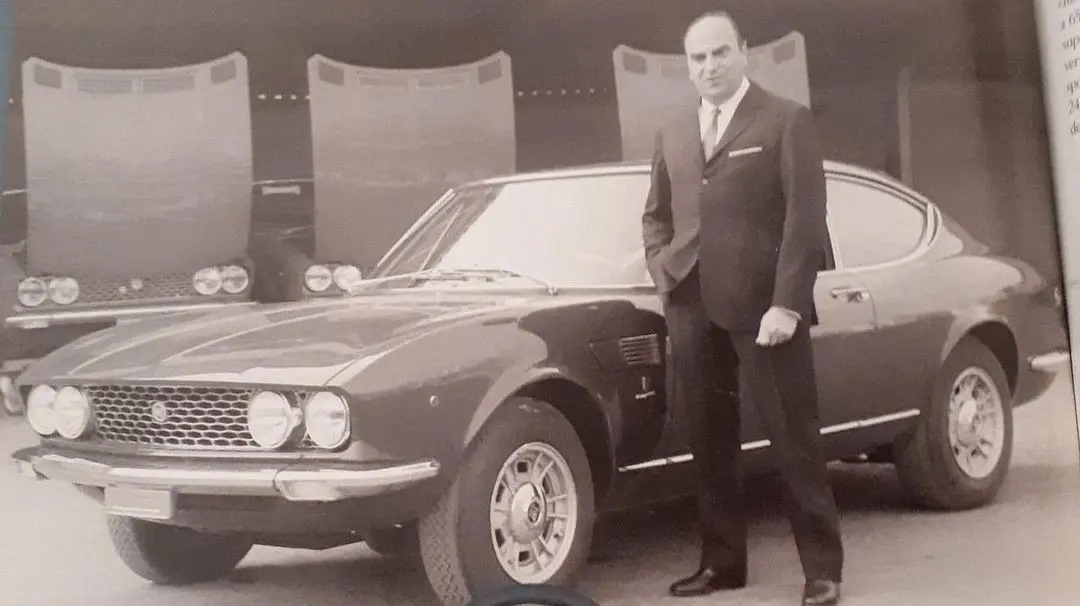
Nuccio Bertone with the Fiat Dino Coupé, unveiled in Geneva in 1967 —
a Giugiaro line that even Enzo Ferrari is said to have loved.

Bertone, Not Pininfarina

More than just for the absence of badges, the 308 GT4 was judged by its shape.

Unlike almost every Ferrari before it, the GT4 was styled by Bertone — not the great Pininfarina — under Marcello Gandini.

The result was something completely different to Modena's usual production line. The design was angular, geometric, and radically modern for its time.

Yet, its sharp edges were not an aesthetic rebellion, but more of a functional response: accommodating a mid-engine layout, four seats, and clear visibility within compact proportions.

Today, the design feels honest. Purposeful. Free of nostalgia.

But in the early 1970s, it challenged expectations — and the Ferrari buyers were rarely forgiving of such challenges.

With a twist: Design & Bertone > Read More 

"Its crisp, angular lines contrasted sharply with Pininfarina’s softer, more flowing design language of the  era"

Engineering and Layout

Its shape may have divided opinion, sure — but underneath, the engineering was unmistakably Ferrari.

The heart of the Dino 308 GT4 is its 3.0‑liter V8, mounted transversely behind the seats.

With around 255 horsepower in European trim and a 7,700‑rpm redline — remarkable for its time —
the engine prioritizes balance and responsiveness over pure theatrics.

And that sense of balance isn’t limited to the engine alone. What strikes the driver isn’t just the headline performance,
but the harmony of the entire package:

- A relatively light chassis

- Neutral weight distribution

- Clear mechanical feedback

- Tight Steering and Brakes


In real‑world driving, the GT4 feels deliberate rather than explosive — a car that grows on you the more you get to know it,
revealing its engineering depth piece by piece.

To find out more about that topic, see: Engineering & Layout

Living with the GT4

From an ownership perspective, the Dino 308 GT4 also occupies a rather unusual position.

On one hand, it offers genuine Italian engineering without the theatrical extremes of some other models — on the other, ownership still demands attention, patience, and the inevitable expenses that come with the badge.

What surprised me most, however, is how comfortable the car actually feels.

Sure, getting in and out isn’t particularly easy — hardly surprising for a car that sits this close to the ground.
But once you’re settled in — snug in the surprisingly comfortable seats, hands on the small steering wheel — the car immediately makes sense.
Visibility is excellent; the windshield is almost panoramic, opening up the road ahead. The seating position feels natural once you’re familiar with it, even if the driver sits unusually far forward and the pedals are subtly offset to the right.

And yes, the car likes to be warmed up properly and feels much smoother once the engine and transmission are up to temperature.

Yet none of that reduces the emotion — it actually adds to it: the sharp responses, the low stance, and the unmistakable V8 sound still make every drive feel special.

Once at temperature, it's easy enough to handle at low speeds and feels perfectly at home on longer journeys.

You might argue it is not a car that craves constant drama — Instead, it rewards time behind the wheel. 

Learn More: Ownership Experiences

...Why It Still Matters

The Dino 308 GT4 matters; not because it was perfect, but because it was necessary.

It marked a turning point: Ferrari’s first production V8, a new design language, and a quieter kind of ambition.

It challenged the expectations — and proved that practicality and performance were not mutually exclusive.


Today, it stands as a reminder that innovation often feels uncomfortable before it becomes accepted.

And for those willing to look past its reputation and looks, the GT4 offers something rare:

A Modena production that only slowly reveals itself to its audience.

Not a legend in hindsight — but a Ferrari that made the future possible.

Mobirise Website Builder
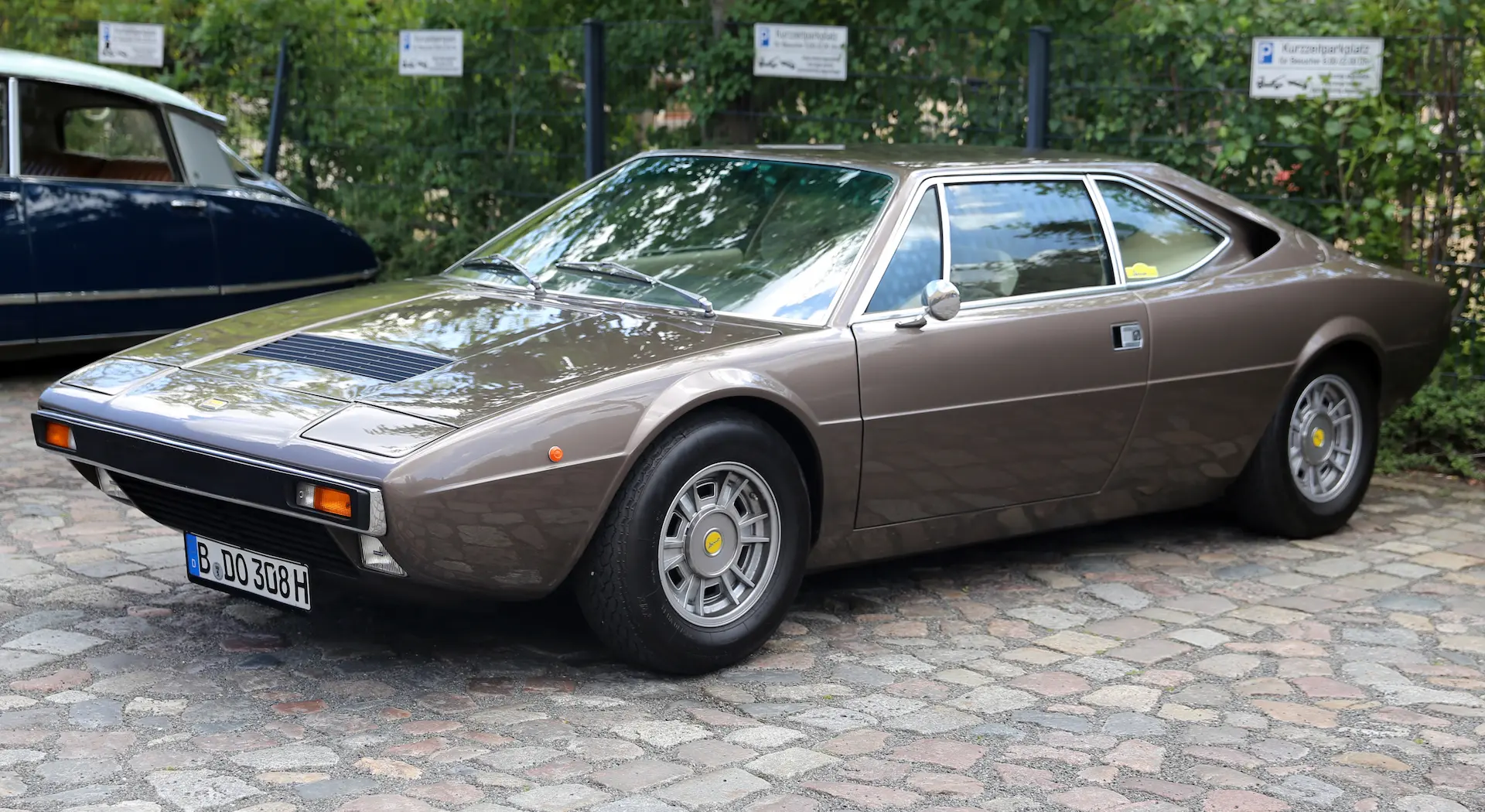
The Dino 308 GT4 in Marrone Metallizzato — understated, angular, and unmistakably Bertone.

Photo by MR.CHOPPERS, licensed under CC BY-SA 4.0 (via Wikimedia Commons).

Mobirise Website Builder
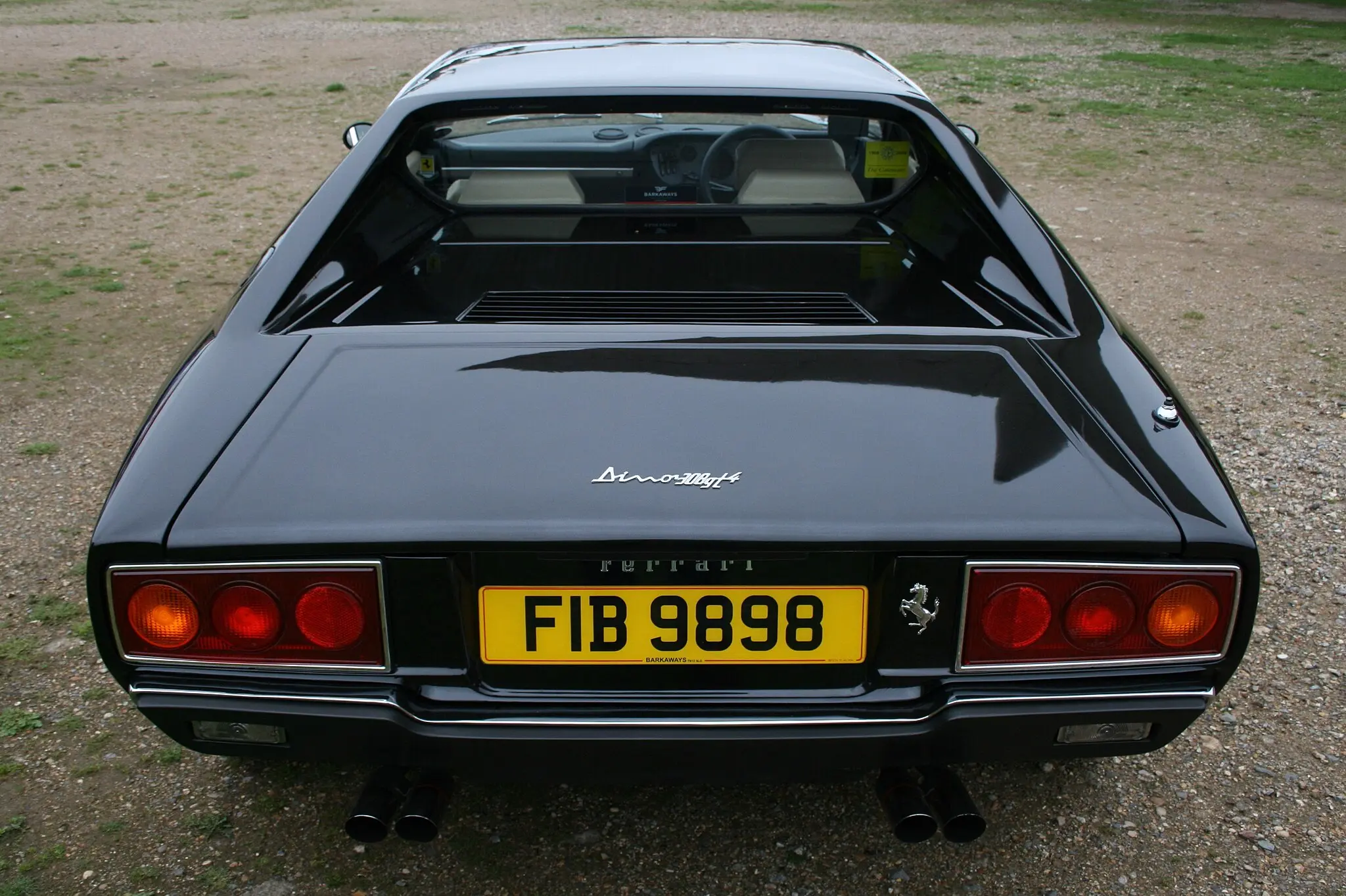
Rear view of the Dino 308 GT4 — here already with the Ferrari branding.

Photo by davocano, licensed under CC BY 2.0 (via Wikimedia Commons).

The Dino 308 GT4 is often misunderstood because it never belonged to an easy narrative.
The following articles aim to take a closer look at the history, design, and engineering that defined it.

Further Reading:

Image credits: Selected photography via CC BY-SA 4.0 Wikimedia Commons (Creative Commons licensed), and original images © mydino308.

Best AI Website Creator